How the best bartenders find a tempo that lets them serve twice as much without ever looking rushed.
§Opening
There is a certain hour on a bar — usually somewhere between the second wave and the close — when everything you know about "Finding Service Rhythm on a Busy Bar" stops being theory and starts being instinct. How the best bartenders find a tempo that lets them serve twice as much without ever looking rushed. What follows is not a manual; it is a field note, written in the same voice I would use leaning against the back bar after a hard shift.
The job teaches you, eventually, that craft and service are not separate skills. They are the same skill seen from two angles, and the bar where they meet is also the bar where the best work happens.
§Background
Most bartenders I respect were not taught any of this in a single sitting. It accumulated — a phrase from a head bartender in one city, a habit picked up on a slow Tuesday in another, a correction from a guest who knew more than they let on. The way to read what follows is the same way: piece by piece, in the order the work itself gives you.
§Core Principles
The first principle is honest measurement — not of the pour, but of yourself. You cannot lead a guest through a drink you have not already taken seriously. The pour is the easy part; the harder part is having something behind it when they look up and ask why.
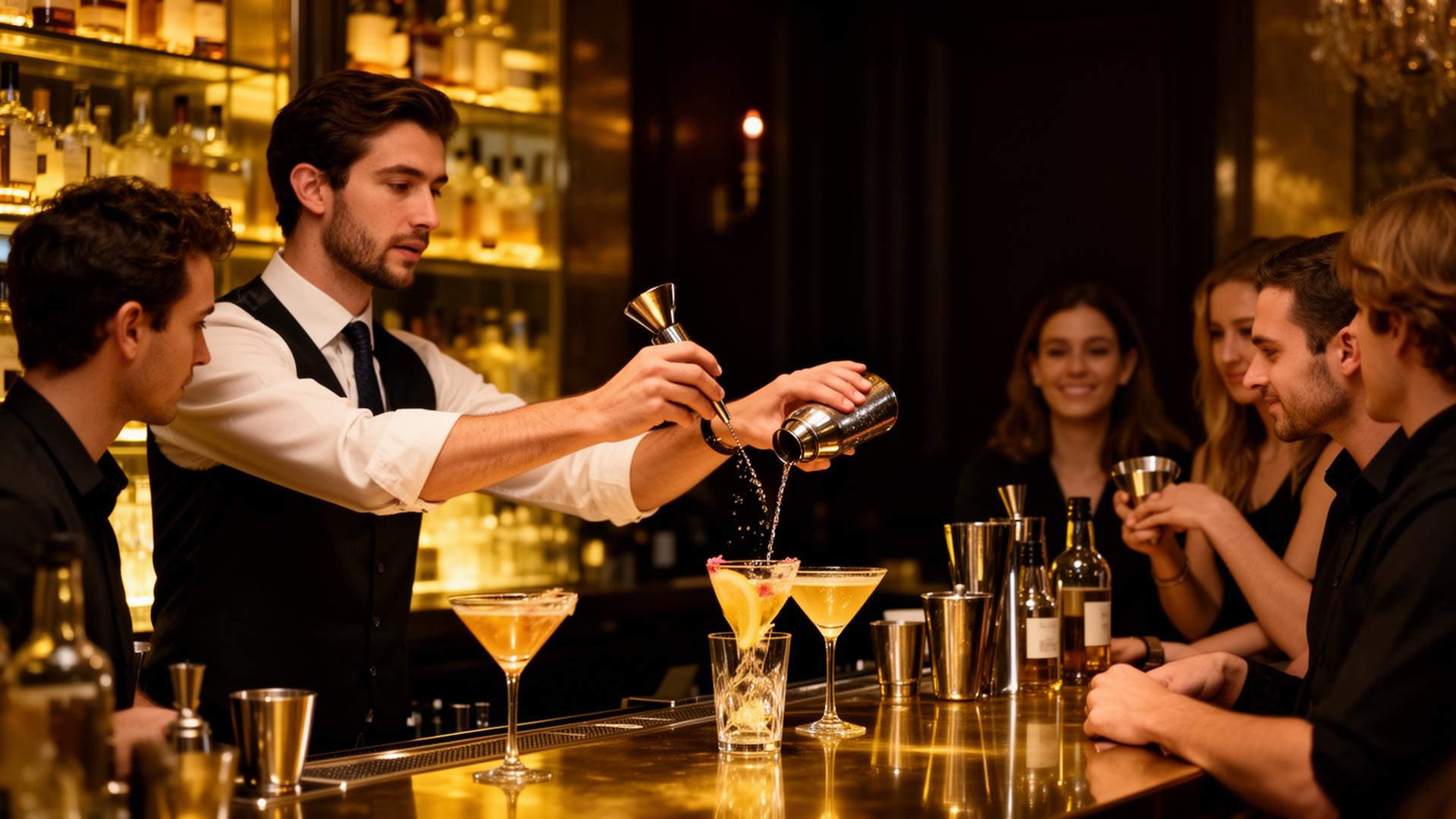
The second is restraint with movement. The best bartenders make fewer motions per drink than you would expect, because each motion is intentional and rehearsed. Watch a finalist working a comp set and you will see the same economy: hands move once, glass moves once, the rest is composure.
The third is reading the room without staring at it. Peripheral attention — who is two sips deep, who has gone quiet, who is about to wave — keeps a section from ever surprising you. Done well, the bar feels almost telepathic; done poorly, it feels chaotic even when it is not busy.
§In Practice
On the floor, lean into the small rituals that compress decisions. A consistent build order. A standard glass-to-rail distance. A signature handoff phrase between you and the back bar. None of these are about style; they are about taking three thoughts off a Friday night so you have room for the fourth.
Practically: prep the things that punish you when missed, in the order they will punish you. Citrus, ice, perishable garnishes, then mise on the rail. Anything fixable mid-service goes last. This is unglamorous and it is the reason your first hour stops feeling like an apology.
§Watch Outs
The most common failure mode is treating speed and care as opposites. They are not. Care is what makes speed survivable. The bartender who looks fast and feels rushed is moving without a plan; the one who looks calm and is actually fast has simply removed the moments that did not need to be there.
§Closing
If there is a thread that runs through everything above on "Finding Service Rhythm on a Busy Bar", it is this: the small choices compound. The hour you spend on the detail nobody asked for is the hour the room will quietly feel, even if no one names it.
Take what is useful here, leave what is not, and add your own observations in the margins. The craft only moves forward when each of us writes a few honest notes back to it — and the journal below collects more of them, organised by the same thread you just read.
Recommended reading